Monday, 18 November 2019

For Love or Money 1: The Changing Context of Work


I've had a chapter on reward included in MuseumEtc's book, 'For Love or Money': Re-engineering the Way Museums Work. This was on behold of Barker Langham, a culture sector consultancy I've been doing some work for.

However, I would hope the content will be relevant for people working in other sectors too.


Introduction

Many museums have been trying to minimise their staffing budgets by reducing headcount and keeping their employees’ salaries low. But this strategy is not sustainable. It is a bit like trying to lose weight – you can focus on your diet and lose a few pounds, but are most likely to end up putting the extra weight back on. Instead of this, most people find the best way of losing weight is to change their lifestyle. The same type of thing is true in organisations too so what museums really need to do is to change the way they organise their work and their people. The supplementary benefit of this approach is often that museums will need less people. Many times, they will also be able to pay their people more appropriately too. This article reviews the opportunity for this re-engineering, supported by digital technology, and its impact on the types and levels of staff rewards.


The Changing Context of Work

Organisations across all sectors are currently undergoing major transformation due mainly to the impact of digital technologies. Many museums are introducing guides and apps to help people explore and learn about their collections. Good examples include new devices such as the Van Gogh Museum’s multimedia guide allowing visitors to walk at their own pace whilst accessing tour guide-like support (Van Gogh Museum, n.d.) and mobile games such as the Victoria & Albert Museum’s Secret Seekers which enable families to uncover facts about the V&A through a social gaming experience (Price, 2017). An even more innovative approach is Cooper Hewitt’s Pen which allows visitors to create and collect their own objects (Cooper Hewitt, 2014). Other institutes in Detroit (Detroit Institute of Arts, n.d.), Cleveland (Moore, 2015) and elsewhere are using virtual and augmented reality to provide exciting new immersive opportunities to interact with their displays. Increasingly, museums are looking at the internet of things and better use of data to provide even more personalised and engaging as well as educational experiences.

However digital transformation is rarely just about technology. All the above examples potentially disrupt these museums’ business models and allow or require the development of new, broader organisational ecosystems. For example, many museums have partnered with Google Arts & Culture (Google, n.d.) to extend their audiences and allow people to view new items or access collections in different ways.

Digital technologies also allow organisations to get closer to their customers as well as other stakeholders in order to better understand and meet their needs. Many museums are developing even deeper, longer-term and more collaborative relationships with their customers, embedding themselves within their communities. They also need to become more customer centric, including through the use of human centred design techniques such as journey mapping, personas, participatory design, user testing and prototyping.

These approaches are particularly important in museums which often find themselves in a rather unfortunate paradoxical position. The positive aspect of this is that the work museums do is increasingly recognised to lie at the centre of strategic culture, knowledge, creative and tourist industries all of which provide significant economic benefits. However, at the same time, museums’ outputs are often under valued by publics and governments which leads to reduced funding and greater pressure on being self financing, pushing museums to reduce salary levels too.

Dealing with this situation requires museums to become even more entrepreneurial and commercial as well as digital and customer focused in order to find new ways to provide a compelling experience for their customers. Museum staff need to be at the centre of this approach.

People have always been the main basis for success in any organisation. This is probably best explained in a classic Harvard Business Review article on the service profit chain which demonstrates how satisfied employees provide satisfied customers and high profits (Heskett et al, 2008). These days, we tend to focus on employee experience, or the level of satisfaction provided by the nature of people’s jobs, and the physical, cultural and digital environments in which they work (Morgan, 2016). We need to provide people with a compelling employee experience to provide the sort of compelling customer experience which was addressed above. And providing a compelling employee experience requires the same sorts of techniques, like journey mapping, which was described earlier, as well as organisational and managerial activities which are just as employee centric as the externally facing ones focus on customers.

As shown in figure 1, it is also useful to recognise that new opportunities for performing activities are often best identified by people acting near to where the work is done rather than by those doing it, for example by customer facing employees rather than customers for external opportunities, and by HR generalists or business partners rather than employees for internal ones.


Looking specifically at the retail sector, which is another area in which organisations often aim to reduce the numbers and pay of staff, Harvard professor Zeynep Ton promotes a good jobs strategy as a basis for an uncommonly employee centric way of operating (Ton, 2014). This is based on an ongoing cycle in which good quality and quantity of labour leads to good operational execution which then provides high store sales and profits which in turn allows high staffing budgets to provide the required labour. In particular, a good jobs strategy allows organisations to maintain a certain level of slack resourcing which enables them to respond to new requirements and opportunities.

Ton’s research suggests this strategy provides significant business benefits over a ‘bad jobs’ approach, and that the strategy works in other sectors too. For example, Toyota has been more successful than many manufacturing companies because its well trained and empowered workers are able to implement standardised management processes which enable the company to deliver excellent quality.

In the museum sector, a good jobs strategy needs to involve quality employees working in a flexible way. This will often require moving away from the standard 9-5 work day and a single location to being more available when and how customers want access, for example with more varied staffing patterns responding to peaks and troughs around exhibitions. Staffing also needs to respond to new and more quickly changing skill requirements, which include more commercial focus, customer service, partnership working, and the broader mindsets and abilities required to provide value. Increasingly, staff will also need to work in cross functional teams and internal or external networks.

One live example at the time of writing is a transformation taking place across the seven museums run by Leicester City Council where four curator posts are being replaced by a new audience development and engagement team, aimed at attracting new and more diverse audiences (Adams, 2019).

Therefore, although digital may reduce, and will certainly change the demand for staff, together with increasing people centricity, this will make people even more important to museum success. Museums need to invest in their core domains as well as putting an increasing focus into digital access and often into locating their physical displays in attractive buildings and facilities. But they need to invest in smarter and more tailored ways of managing their staff too.
-->


Sunday, 17 November 2019

HRD Live Podcast on Strategic Leadership


alt_text

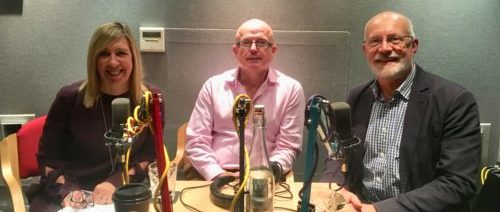
I facilitated this podcast on 'What makes true Strategic Leadership?' earlier this week, together with Mark Bouch from Leading Change and Cath Bailey, HRD at Avon - both also speakers at next year's HRD Summit in Birmingham at the start of February.


I thought it went well - have a listen and let me know what you think.


https://www.hrdconnect.com/2019/11/14/what-makes-true-strategic-leadership-hrd-live-podcast-with-jon-ingham-cath-bailey-and-mark-bouch/


Oh, and if you want to come to the Summit as my guest, let me know about that too.


Jon Ingham

@joningham, http://linkedin.com/in/joningham
info@joningham.com, +44 7904 185134
Top 100 HR Tech Influencer - Human Resources Executive

Mover and Shaker - HR magazine

Monday, 11 November 2019

HR Magazine Different Slant: Modern Melded Network HR Model


My second Different Slant article on modern organisation design is in HR Magazine this month.

The first article was on modern, people-centric organisation models and summarised some of my insights from chapters 6 and 7 of 'The Social Organization', as well as providing a few slight updates on platform and blockchain based organisations too.

The new second article applies this same logic to the HR organisation and provides a new HR model, the Melded Network HR Model that is the first substantial update beyond Ulrich's three legged stool.

The full magazine is available to view or download here (you'll find my Different Slant article on pages 38-40).

And if you read it (and you should), do let me know what you think.

I'll also be publishing some more thoughts (somewhere between the high level review in the HR Magazine article and the detailed treatment in my book) on Linkedin - do check and follow / connect with me there too.


Jon Ingham, @joningham, http://linkedin.com/in/joningham 
info@joningham.com, +44 7904 185134

Top 100 HR Tech Influencer - Human Resources Executive
Mover and Shaker - HR magazine

Sunday, 10 November 2019

The role of people-centric groups in organisation design


My Different Slant article in HR Magazine is now online.

The article suggests modern organisation design will increasingly involve a mix of traditional functions, horizontal (process, project, product, agile) teams, communities and networks, as well as melds of these.

I've outlined these models in a bit more depth in Linkedin, and you may like to check out those posts there as well:


Alternatively, you'll find even more information in The Social Organization.


Jon Ingham, @joningham, http://linkedin.com/in/joningham 
info@joningham.com, +44 7904 185134

Top 100 HR Tech Influencer - Human Resources Executive
Mover and Shaker - HR magazine

Thursday, 31 October 2019

Designing the Organisation and Enterprise Architecture


I presented on designing a customer driven, process based, flat / horizontal organisation at IRMUK's business process and enterprise architecture conference this month.

It was a great event and I learnt a lot about enterprise archirecture as well as checking my understanding of business process design.

I tried to take account of some of these learnings too, broadening out the presentation to include the use of new enterprise architecture opportunities to develop a digital organisation too.

I'm not completely sure I've got this right and will be reflecting more on it over the next few months, and posting again once I've come to some firmer conclusions.


Jon Ingham
 

Friday, 18 October 2019

Leading and managing the MOE


This is my fourth and final post on Arthur Yeung and Dave Ulrich’s new book, Reinventing the Organization. I’ve already dealt with Dave’s new organisational logic, the features of a Market Oriented Ecosystem (MOE) and the process for creating a MOE. The rest of the book deals with the consequences of choosing a MOE option.

The HR aspects of the model are dealt with by the book under the governance heading. Personally, I think these aspects provide more than just governance of the structure - many of them are actually a central part of the organisation form. Culture, in particular, is a key aspect of the ecosystem platform.

Arthur and Dave suggest HR activities will need to be tailored to a MOE and I agree. I actually think that we may need to do more tailoring than he or the case studies suggest. Eg Supercell is heavily focused on teams but they still believe “that one exceptional person equals a hundred ordinary people”. Perhaps it depends on what they mean by exceptional, but they certainly would benefit from recruiting people who can fit well within their teams (which many individualistic superstars often struggle to do). I make more suggestions about this in The Social Organization (TSO).

I’d also have liked to read more about the complexities involved in designing a non-MOE / more distributed ecosystem. These include, for example, how to bring partners with different capabilities together to support the overall capabilities of the ecosystem, and how to handle organisations with different cultures. However, in a MOE these difficulties are largely stripped out by the platform.


There are also some good suggestions on leadership, eg I agree that leadership in an ecosystem needs to be much more distributed than in a traditional organisation. But it’s interesting that they single out Lee Kuan Yew as a leader who ensures accountability. And I can see that this type of authoritarian leader might work well in a centralised MOE. Other more distributed ecosystems will need leaders who are much more consultative and democratic than this.

I also think Arthur and Dave begin an interesting point when they suggest that different types of leaders are required by the platform from the cells. Actually, for me, this is about the network and the cells - the platform needs designing and maintaining, but not leading, as opposed to the people and the network between the people which exists on or uses the platform.

And I think in many MOEs and other ecosystems and organisations, we’re going to need even more different types of leaders, including of networks and cells / horizontal teams, and also of communities and as is most commonly the case currently, of individuals working within functions. However, I do disagree that this should have anything to do with age.

I also think that in many cases, it’s going to be the same people working in various combinations of these different roles. So it may be that they are staffed by different people, but it may also be that the same people need to act differently in different capacities, eg when leading horizontal teams as opposed to when they’re leading communities.

Eg one of my recent posts discussed the challenges faced by people moving between project management and project member positions. I think if we’re asking people to shift between team leadership, network leadership, partner leadership and other roles the challenges are going to be much bigger than this.

I may focus on this agenda in my next book…


Also, I sent Dave a copy of the series before posting them, and he sent me this response which you may be interested in too:

"Response to Jon Ingram

Let me begin my response to Jon’s comments with an apology and a thanks.  In our book Reinventing the Organization we wanted to build on and synthesize previous literature on innovating organizations.  We included 12 initiatives to rethink elements of organizations (network, ambidextrous, post hierarchy, holocracy, agile, ameba, team of teams, etc).  Clearly, we did not include all of these studies, and we missed Jon’s “outstanding” (from my foreword) book The Social Organization.  This was my mistake and we should have included a discussion of his work on platforms which is another piece of the broader market oriented ecosystem (MOE) logic we proposed. 

Our goal was not to just do a book on “organization redesign” (or other elements of reinvention) with a focus on platforms and capabilities (2 chapters in book) but to cover the entire organization reinvention logic, including environment, strategy, integrated governance mechanisms, and leadership  (13 chapters).  So, I apologize to Jon for not including his organization design work.  I am sure we missed insights on elements of the reinvented organization as well (as Jon points out).  Again, we see most of the insights Jon points out are elements of the overall organization reinvention logic. I also want to thank Jon for his insights on organization design. 

Jon disagrees with some of our logic, which is fine.  We like to see pivots from one organization logic to another (hierarchy to systems to capability to market oriented ecosystem).  This means that MOE builds on these previous logic, but evolves them.  We did not make this clear and some organizations still operate as hierarchies, systems, or internal capabilities.  But, in an increasingly turbulent environment (chapter 2) and with strategic agility (chapter 3), the MOE organization offers a new logic of organizing. 

There is a good debate about starting organization change from the inside (my book Organization Capability had a subtitle, “competing from the inside out”) to leverage core competencies versus starting from the outside (our book HR from the Outside in) to anticipate and respond to external changes.  In some ways where organization change starts (inside or outside) is less relevant than the 2 are connected. 

Jon dives deep into the role of platforms.  We would agree that the role of platforms in supporting cells is evolving.  Platforms offer support through technology, common enterprise-wide values, shared learning about building capabilities, and creation and distribution of new processes. 

I am/we (arthur and I) are open to debate as this organization reinvention emerges.  One of my concerns with Jon’s comments is that he keeps talking about “Dave” when these ideas are clearly drawn from exceptional work by Arthur Yeung, the first author on this book and originator of most of the ideas.  He has trained many of the leaders of Chinese companies (including Haier) and has been granted first hand access to the ideas he shaped and companies have implemented in our case studies."  


I told Dave there was no need to apologise, and I wasn’t trying to make a thing of  the connections between our books. This blog is a personalised narrative on what I see happening around me, but also on what I’m doing. And therefore a lot of my posts are commenting from a fairly egocentric perspective. Two years after my book, that still often means commenting on, and making links back to that. So I see and have described how the books has advanced thinking from TSO, but I wouldn’t expect Dave to refer to it. (And he's already been very generous in  shout outs at various conferences around the world too.)

And Dave was right about Arthur of course (not saying he was wrong about everything else) and I've tried to give Arthur a stronger billing, at least in the last three posts.


There's also this comment from Dave on his HR Magazine article:

"Jon has done and will continue to do exceptional work. It is a legitimate and great debate to do work from the inside/out or outside/in. My first book Organization Capability (1990) was subtitled, "competing from the inside out" and built on CK Prahalad's idea of leveraging your core competences. More recently, we have focused more outside in (HR Value Proposition; HR From the Outside In). Hopefully, where ever one starts (inside or outside), they create a virtuous cycle (actually spiral) to both win in the marketplace with customers and investors and in he work place with individual competencies and organization capabilities. Jon's note that not all organizations should be MOE's is a very nice addition we should have acknowledged."


My previous posts:


For more information...
  • Consulting   Research  Speaking  Training  Writing 
  • Strategy  - Talent - Engagement  - Change and OD   
  • Contact me to create more value for your business  
  • jon [dot] ingham [at] strategic [dash] hcm [dot] com

Thursday, 17 October 2019

#HRcoreAcademy Day 1 / Social Talent


I’ve been presenting on Social Talent in the Talent Trends room at Teneo’s HR Core Academy in Amsterdam.


Tom Haak opened the day presenting his  ten top trends for talent management. My suggestion was that shifting from human to social talent (or human plus social talent) needs to be one of those trends.

Work is increasingly specialised. Yes, I know there are calls for polymaths, neo-generalists and even just general generalists (“Generalists are going to Rule the World”) but just look at the variety of job titles in this slide from Tom and Cyriel Kortleven - talk about specialism! ('The Head of All Things Awesome' would do as a catch-all title though).


At the same time, work is becoming more complex and to deal with today's complex, multi disciplinary challenges we need to bring specialists together into teams, groups and networks. Everyone in my session seemed to agree that they spend too much time in meetings. And most raised their hands when I asked which of their organisations compete mainly on social vs human capital.

So why is it that most organisations still focus on managing, measuring, developing and rewarding the performance of individuals rather than doing this for teams?

My suggestion for dealing with this was to focus on organisation design, social HR processes, social talent and leadership / organisation development.


Social organisation design

Moving to a social way of organising starts with getting the organisation design right. It’s difficult to develop the right relationships if people are trying to do something which their job designs don’t enable them to do. For me, that's mainly about building on existing functions to use horizontal teams, communities and networks.

Virginia Bastian, HRD for Germany at Nestle used the Star model to explain the need for organisation design to extend beyond the structure. I think that's an important point although I prefer the McKinsey 7S or even better, my own Organisation Prioritisation Model (OPM) which I think is more useful as it includes a broader range of organisational elements which also need to be aligned with the rest of the organisation today (eg the digital and physical workplace).

And I loved what Nestle have been doing in HR. Firstly, they still have a mainly functional organisation, although innovated to link global, regional and in-country levels, and adding an operational group to Ulrich’s COEs, shared service and HRBPs.


However, the work they do is now focused on an overall Hire to Retire process, one of Nestle’s core end-to-end flows (slide from a different presentation).


Virginia’s own core team of six people work on projects related to improving this process flow. The major steps in the process are then headed from the COEs.

But they’re also looking at using communities and networks (or "community networks"). For example, HR realised they had limited expertise in organisation design and so got people together from change management, BPs, L&D etc to share tools and methodologies, get feeedback and co-create and then share knowledge.

Also, they are looking at building a fluid, ‘plasma’ organisation in Nestle Vietnam! I look forward to finding out more about that.


I didn’t get to explain but all the elements of the organisation (see my OPM again) need to relate to the organisational groups which are used, eg see this presentation on organisation design and the digital workplace (see my slides and my blog post on this).


Social HR processes

We also need to look at how we innovate all our HR processes across the full employment life cycle to focus on building social capital. This is firstly about recruiting, managing and developing people to fit within the teams, groups and networks they are going to participate in, eg by having the team, not just the team manager, recruit new people into the team.

And secondly, it is about managing, measuring, developing and rewarding the performance of teams, other groups and networks, rather than just doing this for individual employees.

I spoke about this in my session on social performance management at Teneo’s HR Core Lab five years ago (see my slides and my blog post on this).

In that session I also talked about the benefits of a social HR approach, including that it focuses on social capital which is more valuable than human capital, so it provides maybe twice the value. It also tends to develop both social capital and human capital, together, so that’s three times the value. And it also anchors the process / approach in the culture, which is particularly true for performance management - one of the reasons this process traditionally doesn’t work is that it’s done in semi secret between an employee and their line manager. In social performance management, this is much more open and ongoing, so it makes it feel like more of a thing. So perhaps four times the value of traditional HR?


Social talent

The room I was speaking in was focusing on talent trends so I wanted to talk about social talent too, ie the important role of connectors and brokers.

So it was interesting that my session was followed by one from Jamie Ward at the BBC talking about their learnings from the way the BBC deals with celebrity talent.

This still focuses very clearly on individual creative superstars (and the group from the BBC all put their hands up in my session to suggest they think human capital is still more important than social capital in their organisation): “Everyone has talent but only a few people who can make the difference for your organisation.”

I think many of the potential learnings from looking at celebrity talent are already happening. Eg “Creative industries are on the look out for talent all the time” is just sourcing / talent pipelining / head farming.  “If we find talent with something to give, we create a role for them” is job sculpting / crafting.

But some of the suggestions haven't been learnt, and these do need to be part of a social talent approach, eg: “Giving talent a hug - we look after them through fallow times.”


I strongly believe in best fit rather than best practice and therefore that every organisation should decide what its own ideology, principles and strategy are going to be. However, I remain unconvinced that the BBC’s strategy is the right one for them. Look at the way the number of writers of a hit song has increased. I don’t see why writing and producing a hit TV programme should be any different from this. There is something different about on-screen talent, but then I think the BBC in particular needs to be in the business of developing potential rather than competing for those already seen as talent, and paying through the nose to get them - something they get plenty of criticism for.

That applies to organisational talent management too - we’d be much better not focusing so much on recruiting and rewarding talented superstars who are already in high demand, and focusing more on creating more effective organisations and talented teams.


Social leadership

Leadership needs to move to being more about leading from within rather than leading from above. It needs to extend to leading groups rather than just individuals, and it needs to change according to the particular type of group - see this blog post for more on this.

In addition, everyone needs to lead, so organisation development approaches like WOL are leadership development interventions too.

Laura Krsnik from Merck talked about their WOL initiative, or ‘movement’ in the other room, focusing on L&D 4.0. This was about "building relationships that matter".

As well as WOL being a social intervention, Merck have also been building a WOL core community consisting of 30 to 40 Wolers who are intrinsically motivated to support the movement. Some of these are mentors who are taking on a particular effort as a mentor, helping to spread WOL into the rest of the organisation. These people can also act as ambassadors attending alumni events etc.

WOL is now being incorporated as a core element in management development programmes, helping to generate better behaviours around generosity etc. (Importantly, it's not the cure for everything however.)


I thought Laura provided an interesting story and agree that WOL and similar developments can often grow bottom-up. However I disagree that they can’t start at the top. Or the fact that they can’t is an individuation that we have the wrong leaders in place now.


That was it and  I hope I (together with the other speakers who illustrated my suggestions so nicely) covered off Tom’s six tests for talent initiatives:


  • Personalisation - yes, that's the focus of networks in particular (though I think there's a linked need for personalisation to the group - groupisation?)
  • Employee focus - communities
  • Speed - horizontal teams
  • Analytics - eg ONA / SNA which I talked about in the section on social talent
  • HR technology - social / digital networks which I meant to talk about in the section on organisation design
  • Open and connected - that's the whole point of social organisation.

I'll post on day 2 soon. 


Picture credits: Sally Brand, Cyriel Kortleven


  • Consulting   Research  Speaking  Training  Writing 
  • Strategy  - Talent - Engagement  - Change and OD   
  • Contact me to create more value for your business  
  • jon [dot] ingham [at] strategic [dash] hcm [dot] com


Tuesday, 15 October 2019

Competitive People Strategy


Perhaps the most interesting article in this month’s HR magazine (other than my own Different Slant of course) is this one on Helmut Schuster at BP.

I love a lot of the suggestions, including the idea about HR creating / catalysing an ecosystem.

However, "HR professionals need to be businesspeople first who just so happen to look after the people agenda." hugely undervalues what HR can provide. Schuster (whose background is from outside HR) is absolutely correct in suggesting that two brains are better than one, so what's the point in us echoing the same thinking as everyone else in the rest of our businesses?

But the point I most object to is Schuster’s suggestion that:

“Don’t whatever you do talk about ‘people strategies’. I hate this phrase as much as I hate the word ‘HR’. What you need to have is a corporate strategy. The people part of it is simply the people agenda. Now get on with it.”

Ah yes, because people are simply a part of the business and managing them is totally simple too. NO! - it’s not true. But if people believe in this then I can see how they might want to fill HR with businesspeople first people, ideally ones from the rest of the business. In fact, why bother having HR at all? (a question which some organisations are asking, but which again shows a lack of understanding about the value HR can add.)


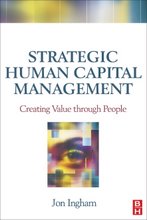
There’s a lot of this attitude around unfortunately. Eg I was really interested in reading Kevin Green’s new book ‘Competitive People Strategy’. And I’m not going to be too hard on this book, as it does reference my first book, ‘Strategic Human Capital Management’, so it’s obviously brilliant! But it does fall into the same trap as Helmut Schuster.

That’s because the book explains the basis for business strategy and presents models like MichaelPorter’s Five Forces, the Boston Consulting Matrix, and Kaplan and Norton’s Strategy Maps. And it does review the key role of organisational capabilities. But it doesn’t explain the role of these capabilities in the organisation strategy maps (see my interview with Porter for an explanation of this) or the opportunity for creating value.

And although the chapters on HR and leadership opportunities are very interesting they are presented as best practices to support inimitable business strategies. There’s nothing on the need for inimitable, best fit people and organisation strategies. And there are no tools for developing organisation strategy which are equivalent to the tools listed for developing business strategy.

Basically, it deals with ‘people support activities’ linked to corporate strategy. That’s fine, and we do need to perform these activities, but it’s not how we act strategically, or as Schuster claims, to “drive business strategy”.


Karen Beaven's book Strategic Human Resource Management takes a similar approach. This book refers to my second boook, The Social Organization, so it's obviously brilliant too. And it is more people centric than Kevin's book, and there are some great case examples from Karen's own experience at River Island in it, but again most of the models etc focus on competitor analysis, PESTEL analysis, etc, rather than getting to understand people.

(And what GDPR has to do with being strategic I've no idea.)


Josh Bersin is absolutely right that HR's new job is about making work more human (though this need isn't that new - as it was the focus of 'Strategic Human Capital Management' back in 2007, and of this blog since then as well.

But that's not just about ensuring conversations about human values are part of our conversations about the rest of the business. It's also having conversations about creating new business potential from these people values.

It's about real competitive people strategy. Not just supporting the business strategy and their use of business models, but our development and effective implementation of "people strategies", using organisation models to support this strategising.


So if you want to know how to create strategic value through people:

  • Connect with me and read my posts on Linkedin.