Thursday, 5 November 2009

Social HR and the CIPD Annual Conference 2009


   Referring to the wisdom of the crowds, McDonalds People SVP, David Fairhurst writes in his months’ HR Magazine that this year’s CIPD annual conference will be a place where smart decisions about the future of our profession will be collectively reached.

Well, maybe.  At least one thing’s going to be more stacked in our favour.

The last time I attended the CIPD conference, two years ago, I blogged:

“The CIPD conference always provides a great input of knowledge. But it is an equally useful social forum as well, enabling participants to catch up with old friends, meet new people, and discuss ideas and issues with other delegates. As became clear from the sessions I attended, the social side of business, supported by the use of social media, is becoming increasingly important too.


Perhaps next year, the conference will make use of social media to engage even more people in the conference?”


Well, I don’t think they did, but this year may be a little different?  Steve Bridger at CIPD Communities is going to be organising Communities Live sessions, and Natalie Alexandrou at CIPD Events is organising a tweet-up (sign up here).  I wonder if they’ll have a Twitter Tracker up on the slides as well?

I don’t know if any of this will allow us to make quite as much impact as at SHRM’s conference this year, but it’s all movement in the right direction.


  • Consulting - Research - Speaking  - Training -  Writing
  • Strategy  -  Talent  -  Engagement  -  Change and OD
  • Contact  me to  create more  value for  your business
  • jon  [dot] ingham [at] strategic [dash] hcm [dot] com

    .

  • Wednesday, 4 November 2009

    Andrew Mayo on Human capital management


     eye   The current issue of Strategic HR Review tackles the broad theme of human capital management.  In one article, Andrew Mayo describes his thoughts on the differences between HCM and Human resource management (see my recent post on his thoughts about human resource measurement too).

    HRM is about treating people as resources:

    “People are resources and represent significant costs, and they have to be managed and administered. HRM is the platform of policies, processes and procedures that enable that to happen. The effectiveness of all these activities, and their efficiency of delivery, need measuring – with standards and targets and regular reporting. But it is a measurement framework that should be separated from HC measures – and too often, “HR metrics” is a basket in which they are all mixed up.”


    HCM however is about how we look at people as value-creating assets:

    “For me, it is very close to talent management. Many organizations have a very restricted and exclusive view of talent, confining it to “high potentials” – which are typically 1 per cent or so of an organization’s people. I would define talent as “those people directly in the line of value creation to one or more stakeholders, and who possess a high level of the relevant knowledge or skills needed.” This will include some quite humble people on the front line of the organization, and is a radically different way of looking at people compared to the systematized and hierarchical approaches of HRM.

    The first discipline of HCM is identifying who these assets are. They may be defined by role, or as exceptional individuals…

    Our next task is to engage them and retain them. Do our HRM systems allow enough flexibility to meet the financial and non-financial aspirations of our essential assets?

    We also want to grow their potential – some will just be great performers, but others will be able to take higher responsibility in the future.

    Finally, we need a culture that recognizes talent and the fact that it may be treated differently...”


    Although I think HCM can go much further than this, I agree with much of what Mayo writes, particularly his first paragraph above (also see my presentation at ITU) .  And I think he makes an important point in stressing that HCM isn’t a replacement for HRM:

    “We need both HRM and HCM. They are different mindsets and many traditional HR professionals find a human capital approach challenging. But it is at the heart of what an organization is there for – nothing could be more strategic.”


    Mayo also writes that he doesn’t think there is a widely accepted and definitive definition of HCM.  I also shied away from giving one when I wrote my book.  But I think it’s time.  Look out for my views on HCM vs HRM later this month.


    Also see my Strategic HR Review article on human and social capital.


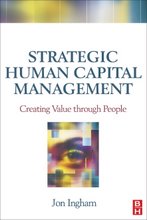
    PS, I think the two eyes from our book covers go rather nicely together, don’t you think?


  • Consulting - Research - Speaking  - Training -  Writing
  • Strategy  -  Talent  -  Engagement  -  Change and OD
  • Contact  me to  create more  value for  your business
  • jon  [dot] ingham [at] strategic [dash] hcm [dot] com

    .

  • Tuesday, 3 November 2009

    Nationalisation at Mobily, Saudi Arabia


    Some of the sessions at the ITU conference provided a context for thinking about talent management challenges within the Arab States,  My favourite presentation was a case study on nationalisation from Dr Fahad Alzahrain from Mobily.

    To an extent, I found this particularly interesting as I already knew quite a log about Mobily from sitting with some of their managers at Etisalat Academy’s Middle East HR Conference earlier this year.

    But it’s also, because I agree with Alzahrain that nationalisation very important.  As he noted, it’s a compulsory requirement by law, and it’s a long-term investment.  It’s also a good example of a process that is often badly broken in many Arabic firms.

    I first became acquainted with the issue of nationalisation in a talk by Hani Hirzallah from Barclays when I presented at Fleming Gulf’s HR Strategies conference in Dubai last year.  And since then, I’ve discussed it with many clients and contacts.  And I do agree with Fahad that those companies who treat is as a bit of a numbers game, and play the game, rather than something that’s important (eg by outsourcing some of their expat staff, employing people who never show up for work, etc) are missing a trick.  Alzahrain summed it up nicely: “Since you have to do it, do it right!”

    So what jeopordises it?  According to Alzahrain this includes:

    • Wrong perception – thinking in stereotypes – a need to educate yourself
    • Absence of good will – manouvering to avoid the governments’ requirements
    • Lack of pro-activity: do not wait for those young people to come after you
    • Influential people’s satisfaction – a small amount of nepotistic pressure gives it a bad reputation.


    Alzahrain suggests there is a ROI to :

    1. Natural Retention: Most of (if not all) Saudis prefer to work in their home country.
    2. Cost Reduction: On the long run, they cost a lot less than Non-nationals.
    3. Head Hunters: They will be your best sourcing agency since they are live examples.


    Alzahrain also challenged me on the value of theory vs practice.  But if Arabic companies are going to make a success of nationalisation, they need a well thought through strategy, and then they need to implement it well.


    Photo credits: Telecom Egypt


  • Consulting - Research - Speaking  - Training -  Writing
  • Strategy  -  Talent  -  Engagement  -  Change and OD
  • Contact  me to  create more  value for  your business
  • jon  [dot] ingham [at] strategic [dash] hcm [dot] com

    .

  • Monday, 2 November 2009

    Talent management in the Arab States


    ITU Capability Development conference at Telecom Egypt, Cairo

    I’ve been co-chairing and presenting at the International Telecommunication’s Capability Development event for the Arab States held in Cairo over the last couple of days.  One of many highlights (I missed the Nile cruise) was Telecom Egypt’s museum of old telecom products:


    I think the other interesting aspect was (as per Budva), the mix of people from government, regulators, HR, L&D, e-learning, technology etc.


    I opened the 1st day of the conference (after the various greetings and introductions) with a session on key challenges for talent managers.


    I’ll post on some of the highlights of the other sessions (for me) shortly.


    Photo credits: Telecom Egypt / Jon Ingham


  • Consulting - Research - Speaking  - Training -  Writing
  • Strategy  -  Talent  -  Engagement  -  Change and OD
  • Contact  me to  create more  value for  your business
  • jon  [dot] ingham [at] strategic [dash] hcm [dot] com

    .

  • Sunday, 1 November 2009

    Guest post on Human Race Horses


    Human race horses   I’m guest posting on metrics, trends, and the future of Human Resources at Michael VanDervort’s The Human Race Horses blog:

    Over There: Jon Ingham Conquers the Globe!

    “I am really excited to be able to provide a guest post from one of m favorite writers in the Human Capital space — Jon Ingham from the United Kingdom…

    Probably more than anyone else I know, Jon is capable of bringing a global perspective to his writing in the HR space…”


    See Mike’s blog for more information on what I had to say.


  • Consulting - Research - Speaking  - Training -  Writing
  • Strategy  -  Talent  -  Engagement  -  Change and OD
  • Contact  me to  create more  value for  your business
  • jon  [dot] ingham [at] strategic [dash] hcm [dot] com

    .

  • Did you miss? (On Social Advantage during October)


    Social Advantage box


  • Consulting - Research - Speaking  - Training -  Writing
  • Strategy  -  Talent  -  Engagement  -  Change and OD
  • Contact  me to  create more  value for  your business
  • jon  [dot] ingham [at] strategic [dash] hcm [dot] com

    .

  • Sponsor this blog!


      I love blogging, but it takes a huge amount of time.  If I’m going to keep this blog – Strategic HCM - going, it needs to make some sort of contribution to my business income.

    I’m therefore looking for sponsorship.

    Interested?


    About me

    I am a consultant, trainer, speaker, writer (etc) focusing on strategic human capital management and other innovations in the way that organisations manage their people.

    I’m also the author of ‘Strategic Human Capital Management: Creating Value through People’ which provides the background for much of what I post about on this blog.

    As well as this blog, I do have another, newer one – Social Advantage, a podcast show – Talking HR, and I tweet too.  This all helps develop interest in me and this blog.

    Supporting this, I’ve now also been recognised as one of the top 25 influencers in HR.

    091217 Top 25 Digital Badge


    About this blog

    My blog generally has between 150-250 visits and 250-350 page views per day, and about 900 subscribers.  These figures are still increasing.

    Sitemeter stats

    Feedburner stats

    Google Analytics stats


    Individual posts (vs just the new posts on the blog’s front page) get read between 1 (yes, really!) and 1000 times, depending (I presume) upon their level of interest.

    In addition, the blog currently has kept a Google page rank of 6 over the last year.  So if you search on something related to HR, you’re quite likely to come across one of my posts.

    The blog is aimed at senior, strategic players in HR and people management (your audience too?) and I post onto it most work days.

    Peer and other recognition includes:

    #12 HR blog

    #13 global talent management blog

    #19 top HR blog to watch 2009

    #52 career management blog (#2 in Europe, #1 in UK)


    The opportunity

    I’m happy to be flexible and look at what will work for you, but my suggestion is that we package three things together:

    • Your logo centrally positioned on my blog (where you can see the gadget headed ‘Sponsorship’ now)
    • A description of your offer in the blog sidebar
    • Sponsored posts
      • Six sponsored posts, ie one approximately every two months, on topics of your choice, for example on your products / services, clients / customers, projects, research, events, interviews with your people etc (you’d obviously want to choose topics that I and my readers will be interested in)
      • Each of these posts would be written by me and I would spend whatever time might be needed to research the area, and to draft and agree the post with you (I think offering you the opportunity to review is important, although I would hope that in the main, you would be able to agree with my copy without amendments)
      • Each of these posts would end with a note indicating that the post has been sponsored by you and repeating the description of your offer / product / service.


    You would be my only sponsor from your sector, and one of a maximum of four sponsors (I’m not going to actively pursue this number of sponsors, but this would be the point where I would start to turn potential new sponsors down).

    So how much will this cost?  Well, I’m able to offer you an introductory rate of £5,000 GBP plus VAT to cover sponsorship, as previously described, over a 12 month period.

    As well as helping to promote your brand, this arrangement may provide further benefits in helping me get closer to your company and its products and services (eg through my relationship with my clients).  And it will be a lot more cost effective than starting up your own blog.

    Still interested?

    • Have a look through the blog (eg use the blog archives and blog labels towards the top of the middle column to the right of this paragraph)
    • Then get in touch (via info [at] strategic [dash] hcm [dot] com) and let’s discuss….


    Saturday, 31 October 2009

    From human to social capital


    I’ve got an article, ‘Building Human into Social Capital’ in the new issue of Strategic HR Review.

    This is an excerpt:


    Building social capital

    But what about social capital? This is another outcome and refers to the connections, relationships and conversations between people working in an organization. The differences between this and both human and organizational capital are important, as each need developing in different ways.

    Social capital is developed by paying attention to how people are relating to each other – to the spaces between people on the organization chart. However, social capital is highly intangible and the links between it and the activities that develop it are complex and distant in time and space. It is not something that is easy to measure or develop and, because of this, it tends to get ignored.

    However, the point of performance in most organizations is the team, not the individual. So it is social capital, rather than human capital, that is the greatest enabler for competitive success. Consider these two examples to illustrate its role:

    1. Developing a culture of innovation. Changing culture depends on having a big idea and aligning everyone in an organization around it. However, this is not just about behavioral and attitudinal change. Encouraging people to be more innovative is also about helping them create new types of meaning about their work – and meaning is established through conversations with other people. So if you change the conversations (part of the social capital), you change the meanings and, therefore, the culture too.
    2. Knowledge management. Many businesses have tried to manage the explicit knowledge residing in their databases but a lot of these organizations are now realizing that much more important is the tacit knowledge in their peoples’ heads. Knowledge management in this paradigm is about connecting the right people and enabling them to participate in effective conversations (social capital again) to share and build on the knowledge that exists.


    See the journal for more from the article (or keep tuned to my Strategic Advantage blog for more of the same).


    • Consulting - Research - Speaking  - Training -  Writing
    • Strategy  -  Talent  -  Engagement  -  Change and OD
    • Contact  me to  create more  value for  your business
    • jon  [dot] ingham [at] strategic [dash] hcm [dot] com

      .

    Thursday, 29 October 2009

    HR Carnival 28 October 2009


       The new, Halloween Spirits, HR carnival is up at Sharlyn Lauby’s HR Bartender.

    Look out for my entry under the ‘pops’ section (I’ve been drinking lots of Orangina while out in sunny France this week).


  • Consulting - Research - Speaking  - Training -  Writing
  • Strategy  -  Talent  -  Engagement  -  Change and OD
  • Contact  me to  create more  value for  your business
  • jon  [dot] ingham [at] strategic [dash] hcm [dot] com

    .

  • Wednesday, 28 October 2009

    Challenges for Talent Managers in Telecoms / the Arab States (ITU Cairo)


    I’m presenting at the International Telecommunication Union’s Regional Human Capacity Development Forum for the Arab States in Cairo on Sunday 1st November.  I’ll be there on the Sunday and Monday, so let me know if you’re there and you want to meet at the Forum, or your office in Cairo.


  • Consulting - Research - Speaking  - Training -  Writing
  • Strategy  -  Talent  -  Engagement  -  Change and OD
  • Contact  me to  create more  value for  your business
  • jon  [dot] ingham [at] strategic [dash] hcm [dot] com

    .


  •